Remember, it was not until August 26, 1920 that [U.S.] women were granted claimed the [hard fought] right to go to the polls and vote. That is only 88 years ago. How many of your grandmothers were alive then?
The pioneering women who picketed the White House were jailed just for asking for this basic democratic right. These women were not criminals, but instead political prisoners. They were beaten with clubs, chained, kicked, choked and otherwise tortured.
The dangerous situation inside the detention facilities escalated, peaking in November in with what became known as the “Night of Terror.” Occoquan Superintendent Raymond Whittaker threatened prisoners that he would end the picketing, even if it cost some women their lives. On November 15, 1917, he instigated the use of force by guards against a newly imprisoned set of pickets, a group that included many core National Woman’s Party (NWP) national and state organizers. Women were beaten, pushed, and bodily carried and thrown into their cells when they refused to cooperate and attempted to negotiate with the superintendent. Other means of physical intimidation also were used. Dora Lewis was knocked unconscious and Lucy Burns handcuffed with her arms above her head.
The next day, 16 of the women began a hunger strike, including Lewis and Burns. They followed the example set the previous month by Alice Paul and Rose Winslow. During her protest, Paul was subjected to psychiatric evaluation, threatened with transfer to an institution for the insane, and force-fed. News of her treatment was leaked outside the facility. When Burns and Lewis grew weak from refusing food, they, too, were force-fed. Burns had a tube forced up her nose rather than through her mouth, resulting in bleeding and injury.
The assaultive nature of the force-feeding process was by all accounts a torturous experience for the women, one that they withstood repeatedly. Verbal techniques of psychological duress also were used to weaken the women’s resolve. Isolated from one another, some prisoners were told falsely during their force-feedings that they were the only person still maintaining the hunger strike – claims that they knew not to believe.
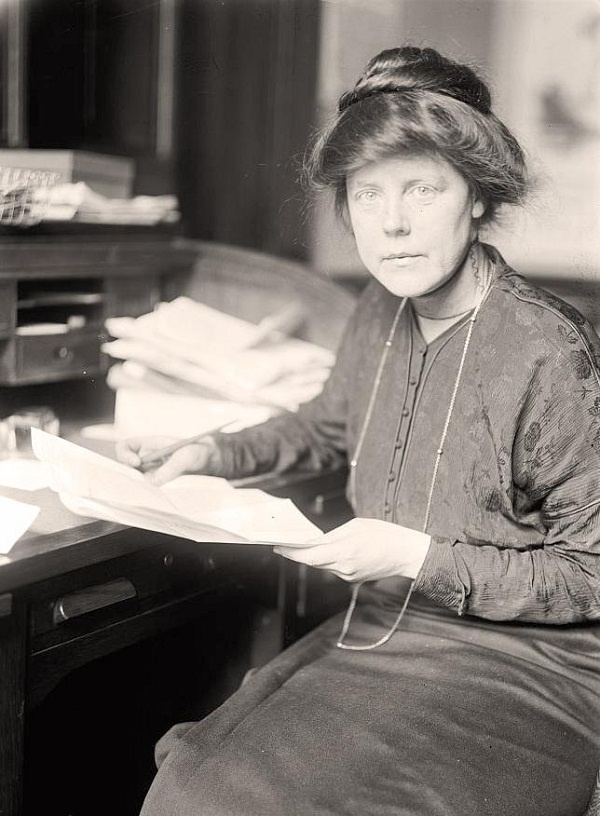
So, refresh my memory. Some women won’t vote this year because–why, exactly? You have laundry to fold? You’re “overwhelmed” by daily news so you’ve decided to check out and abdicate your role in society? You’ve convinced yourself that your vote doesn’t matter? It’s raining? [Make no mistake, the current movements to limit access to voting will disproportionately impede women, people of color and people at economic disadvantage.]
In memory of your grandmother and great-grandmother, in honor of the women who suffered so much for your right to vote…get involved! Get registered! Then vote — and bring a friend. Get a mani-pedi after.
Please, if you are so inclined, pass this on to all the women you know.
P.S.
- Women have always had the democratic human right to vote, but were legally denied it. I have reframed this to reconsider the language of “earned the right,” since it was more of a claiming what was fundamentally already ours.
- California, as always, was progressive and visionary in its policies. Women there started voting in 1911, long before the rest of the U.S. got with the program.
- By the way, women in Portugal were “granted” the right to vote in 1931, but it was not until 1974 that all restrictions based on gender were completely eliminated.
- The right to vote in Portugal comes with citizenship. No need to register or renew registration. No need to align with any political party. You show up at the voting place with your national ID card and you’re given a ballot. No muss. No fuss.
Learn more: